
Close Menu
  • Home
  • News
    • General
    • Politics
    • Press Release
  • Sports
    • Football
    • Athletics
    • Beach Soccer
    • Basketball
    • Table Tennis
    • Other Sports
  • Entertainment
    • Big Brother Naija
    • Lifestyle
  • Health
  • Education
  • Today-In-History
  • About Us
  • Contact Us
Facebook X (Twitter) Instagram
Awijare News
Subscribe
  • Home
  • News
    • General
    • Politics
    • Press Release
  • Sports
    • Football
    • Athletics
    • Beach Soccer
    • Basketball
    • Table Tennis
    • Other Sports
  • Entertainment
    • Big Brother Naija
    • Lifestyle
  • Health
  • Education
  • Today-In-History
  • About Us
  • Contact Us
Awijare News
Home»Today-In-History»Sani Abacha: The Mysterious Demise of Nigeria’s Military Head of State on June 8, 1998
Today-In-History

Sani Abacha: The Mysterious Demise of Nigeria’s Military Head of State on June 8, 1998

adminBy adminJune 8, 2025No Comments3 Mins Read0 Views
Facebook Twitter Pinterest Telegram LinkedIn Tumblr Copy Link Email
Follow Us
Google News Flipboard
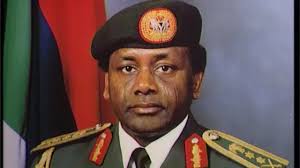
General Sani Abacha wearing a military uniform with epaulettes, seated formally with a stern expression.
General Sani Abacha, Nigeria’s military head of state from 1993 to 1998, remembered for his iron rule and controversial legacy.
Share
Facebook Twitter LinkedIn Pinterest Email Copy Link

Today in history, on Monday, June 8, 1998, Nigeria witnessed a sudden and dramatic end to the rule of one of its most controversial leaders. General Sani Abacha, the military head of state who held power with an iron grip from November 1993 until his death, passed away under mysterious circumstances in the Aso Rock Presidential Villa in Abuja.

Born on September 20, 1943, in the bustling city of Kano, Sani Abacha rose through the ranks of the military with remarkable speed. He attended the Nigerian Military Training College in Kaduna and was commissioned in 1963, embarking on a career that would see him play a central role in almost every coup that shaped Nigeria’s turbulent post-independence era.

Read Also: Nigeria’s Twitter Ban of 2021: A Deep Dive into the Government’s Crackdown on Social Media

Abacha’s path to power was marked by cunning and ruthlessness. In November 1993, he seized control of the country by toppling the short-lived Interim National Government of Chief Ernest Shonekan. Abacha argued that this move was essential for restoring stability after the contentious annulment of the June 12, 1993, presidential election — a poll widely believed to have been won by Moshood Kashimawo Olawale (MKO) Abiola.

As Nigeria’s de facto ruler, Abacha governed with an iron hand. His regime was characterized by the suspension of democratic institutions, human rights abuses, and an unyielding crackdown on dissent. Yet, he also presided over a period of economic growth, largely driven by the oil sector and efforts to reduce Nigeria’s national debt.

Read Also: The Assassination of Kudirat Abiola: A Pivotal Moment in Nigeria’s Democracy Struggle

Tragically, General Sani Abacha died at the age of 54 on June 8, 1998. His burial took place the same day, without an autopsy, further fueling speculation about the true cause of his death. The official statement from the government attributed his sudden demise to a heart attack. However, whispers of foul play — from possible poisoning to assassination — have never fully quieted.

In the years since his death, the legacy of General Sani Abacha has remained as divisive as the man himself. While some remember him as a stabilizing force during a volatile period, others see his rule as a dark chapter in Nigeria’s journey toward democracy.

Read Also: From Military Rule to Democracy: How May 29, 1999 Reshaped Nigeria’s Political Future

The mystery of how he died — and the extent of his influence on Nigeria’s political trajectory — continues to captivate historians, political analysts, and the Nigerian public alike.

Follow on Google News Follow on Flipboard
Share. Facebook Twitter Pinterest LinkedIn Telegram Email Copy Link
admin

Related Posts

Today in Nigeria History: Abule Egba Pipeline Tragedies

December 26, 2025

The Historic 1991 Move From Lagos to Abuja and How Nigeria Chose Its New Capital

December 12, 2025

How Samuel Ajayi Crowther’s Baptism Sparked a Legacy That Transformed African Christianity

December 11, 2025
Leave A Reply Cancel Reply

About
About

We are more than a news website — we are the heartbeat of Nigeria’s unfolding story. At Awijare News, we believe that news is not just information; it’s lived experience. From the bustling streets of Lagos to the quiet corners of local communities, from the roar of stadiums to the sparkle of red carpets, we are here to shine a light on what matters to Nigerians, both at home and across the globe.

Our Picks

Edo Queens Rise to the Summit as NWFL Matchday 13 Delivers Drama Across Nigeria

April 3, 2026

NFRA Leadership Transition Begins as Kelechi Mejuobi Assumes Acting Presidency

April 1, 2026

Tight Battles and Shock Results Define Jagaban Cup 2026 Matchday Two at Legacy Pitch

March 27, 2026
Most Popular

Edo Queens Rise to the Summit as NWFL Matchday 13 Delivers Drama Across Nigeria

April 3, 2026

NFRA Leadership Transition Begins as Kelechi Mejuobi Assumes Acting Presidency

April 1, 2026
  • Home
  • About Us
  • Contact Us
© 2026 ThemeSphere. Designed by ThemeSphere.

Type above and press Enter to search. Press Esc to cancel.