

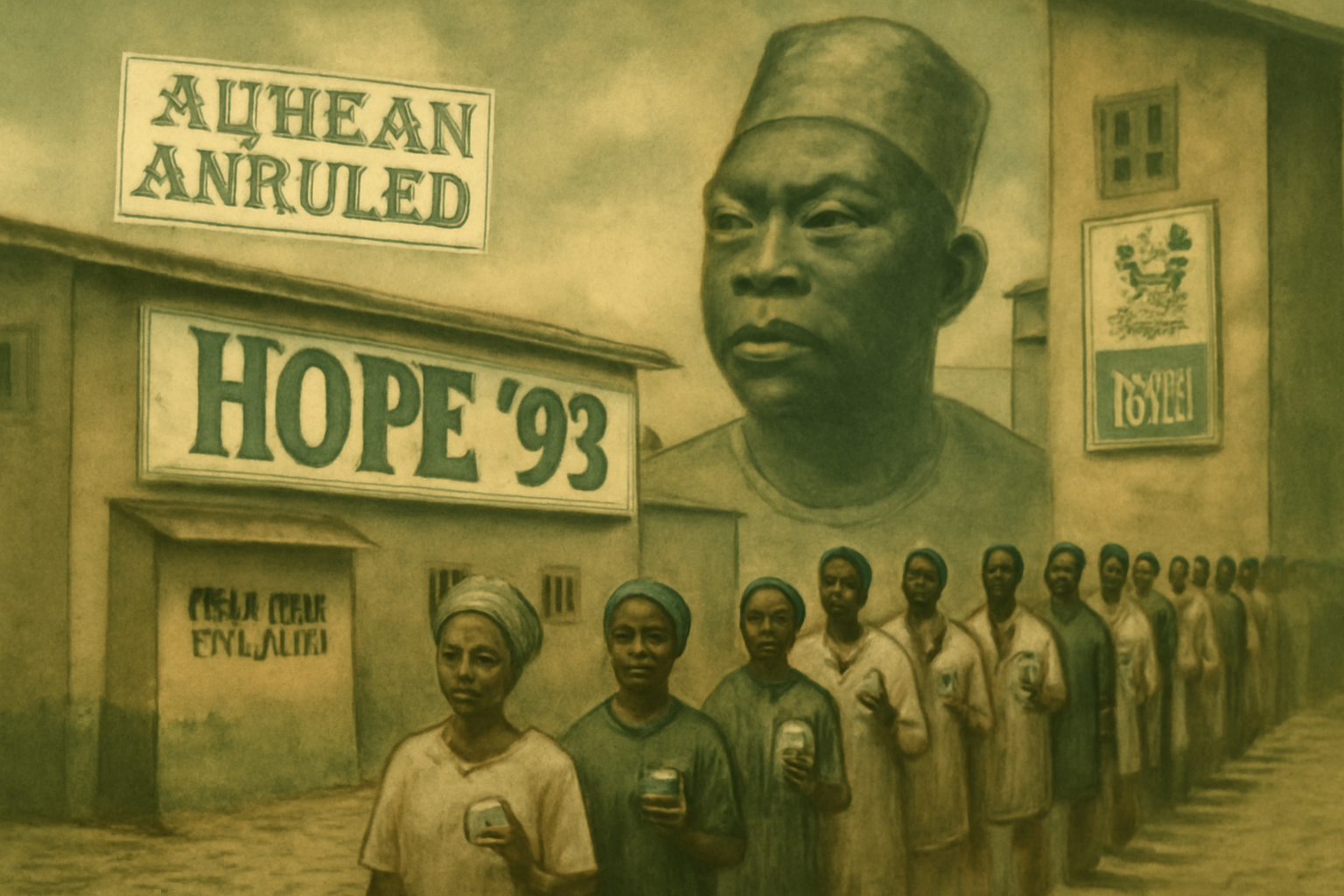
On Saturday, June 12, 1993, millions of Nigerians stepped out with hope in their hearts and unity in their voices. From Lagos to Kano, Port Harcourt to Jos, polling booths were flooded with citizens eager to make history. It was Nigeria’s first presidential election after a decade of military rule, and for many, it symbolized the rebirth of democracy. The two candidates were Moshood Kashimawo Olawale (MKO) Abiola of the Social Democratic Party (SDP) and Bashir Tofa of the National Republican Convention (NRC).
The excitement was electric. For the first time, Nigerians believed they were on the verge of electing a true people’s president—MKO Abiola, a successful businessman and philanthropist who ran on the platform of “Hope ’93”. He campaigned vigorously with a message that resonated across ethnic, religious, and regional divides.
Read Also: A Defiant Moment in Nigeria’s History: Chief MKO Abiola Declares Himself President
What followed was widely regarded as the freest and fairest election Nigeria had ever seen. The option A4 voting system—a transparent open-ballot format—enabled observers and voters alike to verify the credibility of the process. Preliminary results showed Abiola with a clear lead, even winning in his opponent’s home state of Kano.
But just as Nigerians prepared to celebrate a new era, everything unravelled.
Read Also: The Enigmatic Demise of Nigeria’s Strongman: A Look Back at General Sani Abacha’s Mysterious Death
The Annulment That Shook the Nation
On June 23, 1993, then-military ruler General Ibrahim Babangida annulled the election results, citing vague threats to national security. No evidence was ever provided. The announcement sent shockwaves across the country and beyond, sparking nationwide protests, international condemnation, and years of political instability.
It was more than just the cancellation of an election—it was the silencing of the people’s voice. The annulment triggered outrage and despair, leading to a democratic crisis that would persist until the return to civilian rule in 1999.
MKO Abiola, the presumed winner, never gave up his mandate. On June 11, 1994, he famously declared himself the lawful president of Nigeria and was subsequently arrested. He died in detention under mysterious circumstances on July 7, 1998, exactly one month after the death of General Sani Abacha.
Read Also: Nigeria’s Twitter Ban of 2021: A Deep Dive into the Government’s Crackdown on Social Media
June 12: A Symbol of Democratic Struggle
For years, activists, journalists, students, and civil society groups kept the memory of June 12 alive. It became a rallying cry for democratic reform and a symbol of the people’s resilience. In 2018, President Muhammadu Buhari formally declared June 12 Nigeria’s Democracy Day, replacing May 29. MKO Abiola was posthumously awarded the GCFR (Grand Commander of the Federal Republic), the nation’s highest honour.
The recognition came 25 years late—but it served as an official acknowledgement of a truth Nigerians had long known: MKO Abiola won the 1993 presidential election.
Read Also: The Assassination of Kudirat Abiola: A Pivotal Moment in Nigeria’s Democracy Struggle
Why June 12 Still Matters
Today, June 12 is not just about remembering a stolen mandate. It is a moment to reflect on the ongoing struggle for credible elections, civil rights, and accountable governance in Nigeria. It’s a reminder that democracy is not a destination, but a continuous journey.
As we remember the events of June 12, 1993, we honour the courage of Nigerians who stood—and still stand—for free and fair elections. We remember MKO Abiola not only as a candidate who won but as a man who dared to dream of a Nigeria that truly belongs to all.
