

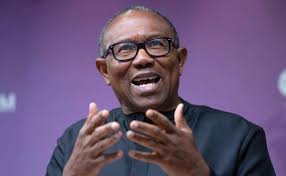
Former Anambra State governor and 2023 presidential candidate of the Labour Party, Mr Peter Obi, has officially dumped the Labour Party for the African Democratic Congress (ADC), marking a major political shift with clear implications for Nigeria’s 2027 general elections.
Mr Obi announced his defection on Tuesday during a well-attended political rally held at the Nike Lake Resort Hotel in Enugu, a symbolic venue in the South East that has become synonymous with political mobilisation and grassroots engagement.
Read Also: Lagos Ex-International Cup 2026 Buzz Grows as Legends Adopt Grassroots Clubs Across the State
Addressing supporters and party faithful, the former governor struck a hopeful but combative tone, framing his decision as part of a broader national rescue mission rather than a personal political move.
“We are ending this year with the hope that in 2026 we will begin a rescue journey,” Obi declared, drawing loud applause from the crowd. “We will resist rigging of elections by every lawful means in 2027.”
Read Also: Super Eagles Injury Update: Alebiosu and Dessers Face Fitness Tests at AFCON Camp
A Strategic Exit from Labour Party
Peter Obi’s exit from the Labour Party brings to a close a political relationship that defined Nigeria’s 2023 presidential election narrative. As the LP flag bearer, Obi galvanised millions of young voters and first-time participants, reshaping political engagement across the country despite not winning the presidency.
However, internal party tensions, leadership disputes, and questions around organisational strength have lingered within the Labour Party since the election. While Obi has remained largely diplomatic about those issues, his move to the ADC appears to be a calculated step toward building a more structured and nationally competitive political platform ahead of the next election cycle.
Read Also: Super Eagles Rotate Squad, Still Soar as Nigeria Defeat Uganda 3-1 at AFCON
Defection with Structure and Support
Unlike typical high-profile defections that involve solitary political figures, Obi crossed over to the ADC with a sizeable bloc of his former supporters from the Labour Party. The coordinated movement suggests months of behind-the-scenes planning and negotiations aimed at avoiding political isolation.
Sources close to the development say the ADC leadership has been positioning itself as a coalition-friendly platform capable of accommodating reform-minded politicians dissatisfied with the mainstream parties.
Read Also: Benin Referee Djindo Louis Houngnandande to Officiate Uganda vs Nigeria AFCON Decider
2027 Already in Focus
Although Nigeria’s next general election is still years away, Obi’s remarks leave little doubt that 2027 is firmly on his political horizon. His emphasis on lawful resistance to electoral malpractice reflects lessons drawn from the 2023 polls and signals a renewed focus on election integrity, voter mobilisation, and institutional reform.
For many of his supporters, the defection represents a reset rather than a retreat. For critics, it raises questions about political consistency in a system where party switching remains common.
What remains clear is that Peter Obi is not stepping away from national politics. Instead, he is repositioning, rebranding, and preparing for what could be another defining chapter in Nigeria’s evolving democratic journey.
