

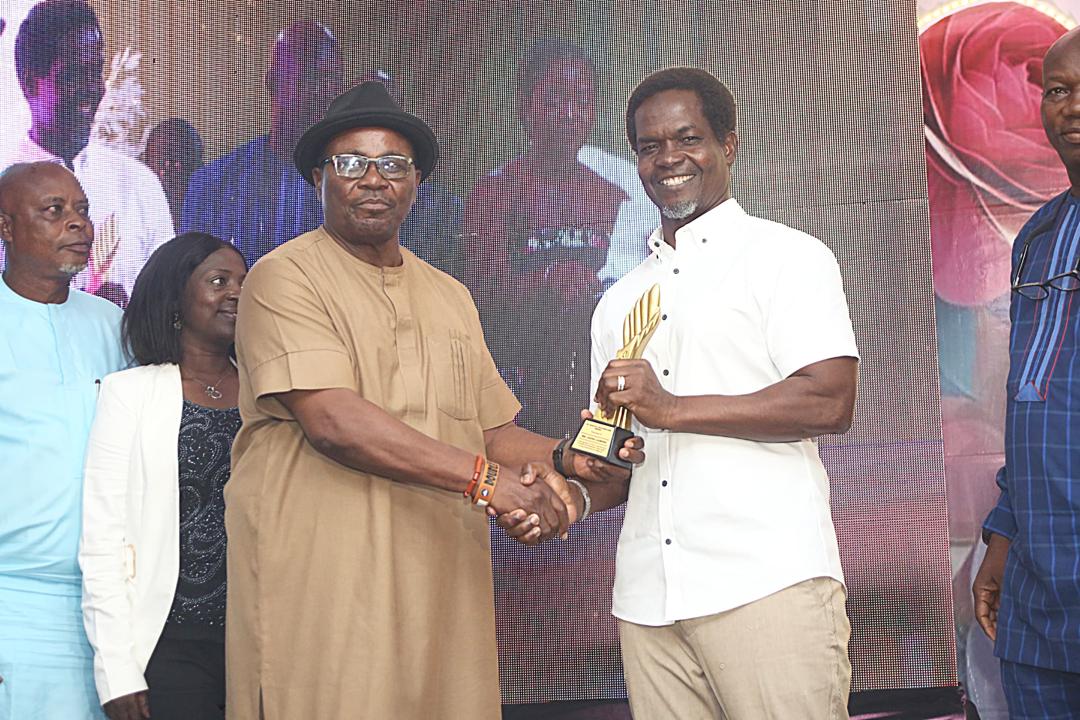
On Thursday night, the halls of Eko Club in Surulere glowed with pride, legacy, and recognition as the 5th edition of the prestigious Sportsville Awards unfolded. Among the shining stars of the evening, one figure stood out—not just for the honour he received but for the heartfelt message he delivered.
Hajji Gafar Olawale Liameed, Chairman of the Lagos State Football Association, was one of the recipients of the coveted Sportsville Special Recognition Award. But rather than bask in the spotlight alone, Liameed turned it towards those often left in the shadows—the unsung heroes of Nigerian grassroots football.
Read Also: Before the Final Whistle: A Living Tribute to Mazi Linus Mba
Flanked by fellow LSFA board members, football stakeholders, and long-time associates, Liameed took to the stage not to speak about his own achievements but to honour the unrecognised talents scattered across Lagos State’s IBILE divisions—Ikeja, Badagry, Ikorodu, Lagos Island, and Epe.
“This award isn’t just for me,” he began, voice steady with conviction. “It belongs to the Stephen Adeniyis, the John Ikennas, the Fatimo Raheems, and the Isa Adams—young footballers whose names may never make headlines, but whose dreams burn just as brightly.”
Holding up the award plaque, he added, “The mirror on this plaque is more than decorative—it reflects the sweat, struggles, and silent triumphs of the boys and girls playing barefoot on rough pitches, chasing a future they believe in.”
It was a poignant moment—one that resonated deeply with many in the room. Liameed’s words were not rehearsed fanfare; they were a raw, genuine reminder of the purpose behind the platform he occupies: to serve, to uplift, and to keep pushing the boundaries of opportunity.
Known for his relentless commitment to youth development and grassroots football, Liameed’s recognition felt like a collective win for every overlooked talent still fighting for a chance. And in his parting words, he made it clear that the journey is far from over:
“The reward for hard work,” he said with a knowing smile, “is more work.”
It was more than a speech—it was a rallying cry.
