

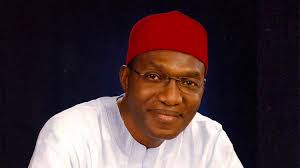
On Thursday, June 14, 2007, Nigerians witnessed one nation’s democratic history. Just 17 days after he was sworn in, Dr. Andy Uba, the then newly elected Governor of Anambra State, was removed from office by the Supreme Court of Nigeria. It was a political earthquake.
For many citizens, it was both shocking and relieving. Shocking, because it was rare to see such swift judicial reversal. Relieving, because it offered hope that institutions could still correct political wrongs—no matter how powerful the person involved.
Read Also: A Defiant Moment in Nigeria’s History: Chief MKO Abiola Declares Himself President
The Briefest Tenure in Nigeria’s Governorship History
Andy Uba’s tenure remains the shortest in Nigeria’s democratic history. Sworn in on May 29, 2007, after being declared winner of the April 2007 governorship election in Anambra, Uba’s emergence was highly controversial. Yet no one imagined it would end in just over two weeks.
The twist came when the Supreme Court ruled that the election that brought Andy Uba to power was null and void.
Why?
Because Peter Obi, the incumbent governor at the time, was yet to complete his four-year tenure, which began in March 2006—following a protracted legal battle that restored his stolen mandate after the 2003 elections.
The Court made it clear: “The Independent National Electoral Commission (INEC) erred by conducting an election when there was no vacancy in the Anambra governorship seat.”
Read Also: The Enigmatic Demise of Nigeria’s Strongman: A Look Back at General Sani Abacha’s Mysterious Death
Peter Obi’s Victory—A Triumph for Rule of Law
The decision reinstated Peter Obi, leader of the All Progressives Grand Alliance (APGA), who had earlier been unjustly removed through an impeachment in November 2006. Though he was reinstated in February 2007, INEC still went ahead to conduct the April 2007 election.
For many Nigerians, this was the moment the judiciary showed strength and independence. It reminded everyone that political office isn’t about party dominance or federal backing—it’s about legality and constitutional order.
Read Also: Nigeria’s Twitter Ban of 2021: A Deep Dive into the Government’s Crackdown on Social Media
The Political Fallout
Andy Uba’s removal sent shockwaves across the political scene. A former aide to President Olusegun Obasanjo and backed by the ruling People’s Democratic Party (PDP), his fall from grace was a humbling moment for many politically ambitious individuals.
It also redefined the importance of the rule of law in the electoral process. Citizens and civil society organizations hailed the decision as a win for democracy.
Read Also: The Assassination of Kudirat Abiola: A Pivotal Moment in Nigeria’s Democracy Struggle
Legacy of June 14, 2007
The events of June 14, 2007, remain etched in Nigerian political history not just because of the personalities involved but for the legal precedent it set.
It marked a bold assertion by the Supreme Court that tenure, once commenced, cannot be undermined by election timetables. It also encouraged voter confidence in the judiciary as a last resort in seeking electoral justice.
