

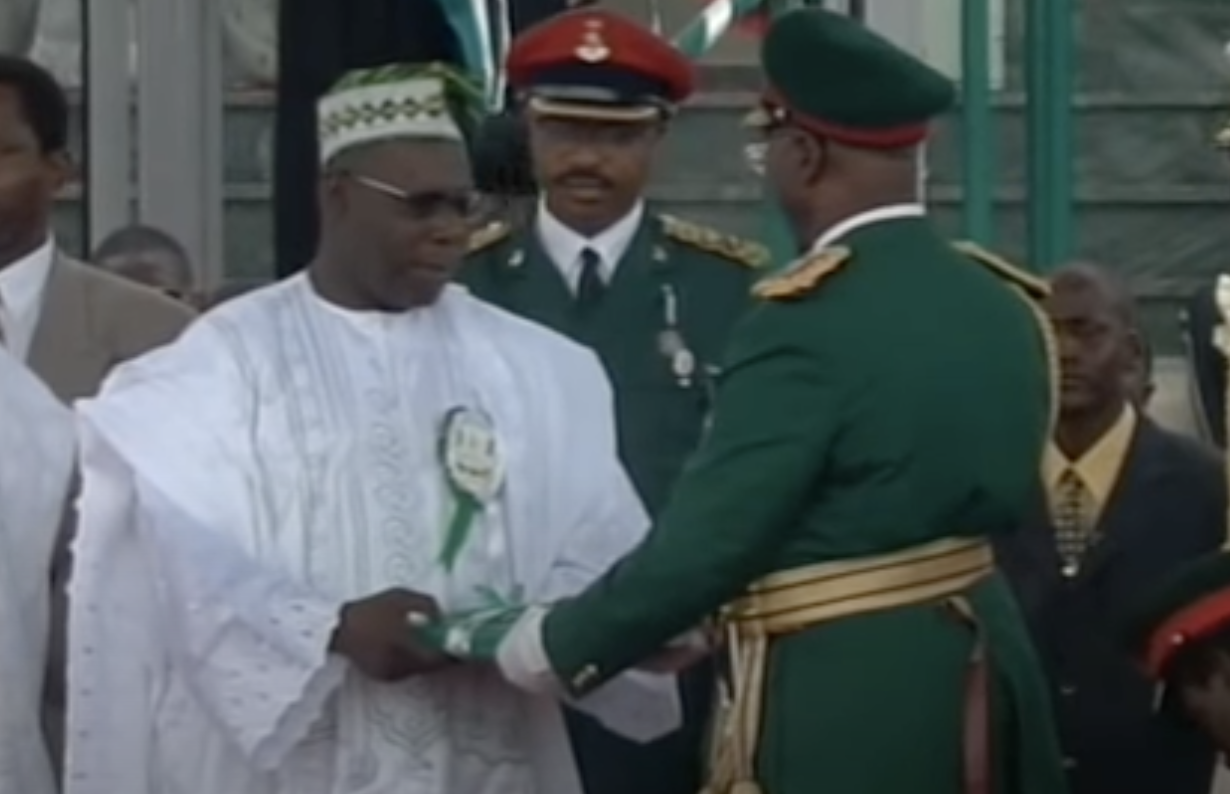
Today in history, on Saturday, May 29, 1999, Nigeria stepped into a new chapter.
That day marked the moment retired military General Olusegun Obasanjo officially assumed office as Nigeria’s democratically elected president, becoming the first to do so after over 15 years of military rule. It was more than just a ceremonial handover—it was a national rebirth.
Obasanjo, who had previously served as military head of state from 1976 to 1979—succeeding the late General Murtala Muhammed after his assassination—returned to the presidency through democratic means. In the presidential election held on February 27, 1999, he contested under the People’s Democratic Party (PDP) and faced off against Olu Falae, the joint candidate of the Alliance for Democracy (AD) and All People’s Party (APP).
Read Also: Nigeria’s Defining Political Restructure: The Day 12 States Replaced 4 Regions
When the votes were counted, Obasanjo emerged victorious with 62.78%, while Falae garnered 37.22%. It was a decisive win that reflected a country ready for change and desperate for democratic leadership.
Why May 29 Mattered
Obasanjo’s inauguration marked Nigeria’s official return to civilian rule, after decades of political turbulence, coups, and military regimes. This monumental day was henceforth designated as “Democracy Day”, a yearly celebration to honor the country’s hard-won return to democratic governance.
For nearly two decades, May 29 held national significance—until 2018, when President Muhammadu Buhari shifted the official Democracy Day to June 12, in recognition of Moshood Kashimawo Abiola’s victory in the June 12, 1993 election. Abiola’s win was widely regarded as Nigeria’s most credible election to date, but it was annulled by then-military ruler General Ibrahim Babangida. Abiola was later detained and died in custody after declaring himself the rightful president.
Buhari’s shift was a symbolic move, honouring Abiola and the democratic aspirations of millions of Nigerians who voted in 1993.
May 29, 2000: A Gesture of National Healing
One year after his inauguration, on May 29, 2000, President Obasanjo made another historic move—he granted amnesty to Biafran officers who had been dismissed from the Nigeria Police Force after the civil war (1967–1970). It was a lesser-known but deeply symbolic act aimed at fostering national reconciliation and healing wounds from one of Nigeria’s darkest chapters.
Why It Still Matters
May 29 is not just a date—it’s a mirror of Nigeria’s ongoing struggle to define its democratic identity. From military regimes to free elections, from annulled mandates to reconciliatory amnesty, this day threads together many defining moments in Nigeria’s political history.
Even as June 12 now carries the official torch of Democracy Day, May 29 remains a landmark date that reshaped Nigeria’s trajectory toward civilian governance, accountability, and unity.
