

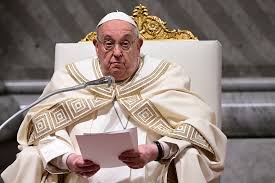
At 9:45 AM, from the Casa Santa Marta in the heart of the Vatican, Cardinal Kevin Farrell, Camerlengo of the Apostolic Chamber, delivered a message that echoed across the Catholic world and beyond:
“Dearest brothers andsisters, with deep sorrow I must announce the death of our Holy Father Francis. At 7:35 this morning, the Bishop of Rome, Francis, returned to the house of the Father…”
These words marked the end of a remarkable era.
Pope Francis, born Jorge Mario Bergoglio in Buenos Aires, Argentina, died on March 31, 2025, at the age of 87, after a prolonged battle with respiratory illness. His death brings to a close a papacy defined by humility, reform, compassion, and a tireless devotion to the most marginalized people in society.
A Battle with Illness in His Final Days
The late Pope had been in fragile health for years. After being admitted to the Agostino Gemelli Polyclinic Hospital on February 14, 2025, with a serious case of bronchitis, his condition worsened. Doctors diagnosed bilateral pneumonia just days later.
Although he was discharged after 38 days to continue recovery at the Casa Santa Marta, the Vatican residence where he chose to live over the more palatial Apostolic Palace, his condition ultimately deteriorated.
His respiratory challenges were not new. In 1957, a young Bergoglio underwent surgery in Argentina to remove part of a lung due to infection. These health setbacks became more frequent in his later years, including the cancellation of a 2023 trip to the UAE due to flu and lung inflammation.
A Pope Unlike Any Other
From the moment of his election in 2013, Pope Francis broke expectations. The first Jesuit Pope. The first from the Americas. The first non-European in over a millennium. And perhaps the first in a long time to so deeply embody the Gospel’s call to mercy, simplicity, and inclusion.
He dined with the poor. He lived in modest quarters. He embraced the estranged and the forgotten. From climate justice to interfaith dialogue, from the dignity of labour to welcoming refugees, Francis was the Pope of the people.
A Simpler Send-Off, By His Own Request
Pope Francis didn’t just change how a Pope lives—he also redefined how a Pope should be remembered. In April 2024, he approved an updated edition of the liturgical book for papal funerals, now known as the Ordo Exsequiarum Romani Pontificis.
The changes reflect his vision: simplicity, faith, and pastoral humility.
According to Archbishop Diego Ravelli, the revised rite moves the declaration of death to the chapel and ensures the Pope’s body is immediately placed into the coffin. The goal? To emphasize that this funeral is for a servant of Christ, not for a worldly dignitary.
“The renewed rite seeks to emphasise even more that the funeral of the Roman Pontiff is that of a pastor and disciple of Christ,” said Archbishop Ravelli.
A date for the funeral has yet to be announced, but the Vatican has confirmed that the rites will align closely with the Pope’s wishes—a final act of witness to the life he lived.
A Legacy That Lives On
Pope Francis leaves behind more than Church documents and headlines. He leaves behind a spiritual blueprint for compassion, an insistence that the Church be a “field hospital” for the wounded, and a legacy of humanizing the papacy in modern times.
As bells toll across cathedrals and prayers rise from homes, parishes, and plazas, the world bids farewell to a Pope who walked with his people—often slowly, sometimes painfully, but always with love.
