

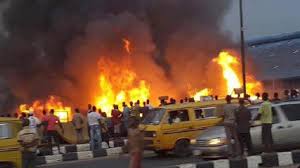
December occupies a special place in the emotional calendar of Lagos. It is usually a season of movement, celebration and reunion. Yet for residents of Abule Egba and surrounding communities, two separate December tragedies stand as painful reminders of how fragile life can be when poverty, infrastructure failure and desperation collide.
On this day in Nigeria history, December 26 marks the anniversaries of two fuel pipeline explosions that shook Lagos to its core in 2006 and 2007. Though separated by a year, both incidents followed a hauntingly similar pattern and left wounds that have not fully healed.
Read Also: Ademola Lookman delivers again as Super Eagles talisman shines on AFCON stage
Tuesday December 26, 2006 The Abule Egba Inferno
On Tuesday, December 26, 2006, Abule Egba became the scene of one of the deadliest industrial disasters in Nigerian history. Fuel had been leaking from a vandalized pipeline running through the densely populated area. As news spread, residents and passersby reportedly gathered to scoop petrol from the open pipeline, a reflection of the harsh economic realities of the time.
Tragedy struck when the spilt fuel ignited. Within moments, flames tore through the area, leaving destruction in their wake. The Nigerian Red Cross later confirmed that 269 bodies were recovered from the scene. Many more were injured, displaced or traumatized.
The disaster exposed the dangerous proximity of fuel pipelines to residential neighbourhoods in Lagos. It also raised urgent questions about pipeline security, emergency response systems and the socioeconomic pressures that push people into life-threatening situations.
For Abule Egba, the explosion was not just a headline. It was a collective loss that turned homes into memorials and transformed a regular Lagos suburb into a symbol of national grief.
Read Also: Eti Osa Referees Society Wins Lagos 5-A-Side Championship in Dramatic Final
Wednesday December 26, 2007 A Grim Repeat on the Outskirts of Lagos
Exactly one year later, on Wednesday, December 26, 2007, tragedy struck again on the outskirts of Lagos. At least 45 people lost their lives when fuel they were syphoning from a buried pipeline caught fire.
The timing was chilling. Another December 26. Another pipeline. Another group of Nigerians drawn by fuel leakage and the promise of survival or quick income. Once again, fire followed.
This second explosion reinforced fears that lessons from the Abule Egba disaster had not been fully learnt or implemented. Despite public outrage and promises of reform after 2006, pipeline vandalism and unsafe fuel scooping remained widespread.
For many Lagosians, the 2007 incident reopened wounds that were still fresh. It underscored how systemic issues such as unemployment, poor urban planning and weak enforcement continued to put lives at risk.
Read Also: Lagos Unveils Sanwo-Olu Mini Stadium as Grassroots Football Gets Major Lift
What These Tragedies Mean for Lagos History
As a historian of Lagos, these incidents are not isolated events. They sit within a broader story of rapid urban expansion, energy infrastructure stress and survival-driven risk-taking in one of Africa’s fastest-growing cities.
Abule Egba is a major transit corridor linking different parts of Lagos mainland. Its dense population and proximity to critical infrastructure made it vulnerable long before disaster struck. The pipeline explosions of 2006 and 2007 forced Lagos and Nigeria to confront uncomfortable truths about development without safety and growth without protection.
They also changed public discourse. Pipeline surveillance increased. Community awareness campaigns were introduced. Yet, the memories remain a cautionary tale etched into Lagos history.
Read Also: Super Eagles Edge Tanzania 2-1 in AFCON Opener as Lookman Shines in Fes
Remembering the Victims
Beyond statistics and official reports are human lives. Families who lost breadwinners. Children who never returned home. Communities that learnt too late how deadly fuel leaks can be.
Today in Nigeria, history is not only about remembering dates. It is about honouring lives lost and ensuring their deaths were not in vain. The Abule Egba pipeline tragedies remain a solemn reminder that progress must never come at the expense of human safety.
